Showing posts with label find. Show all posts
Showing posts with label find. Show all posts
Thursday, November 3, 2016
Resolve CommentLuv Could Not Find A Feed of the Blog In Blogger
Resolve CommentLuv Could Not Find A Feed of the Blog In Blogger
For blogger blogs encountering the error message "RSS Error: A feed could not be found at (put your RSS feed URL here). A feed with an invalid mime type may fall victim to this error, or SimplePie was unable to auto-discover it.. Use force_feed() if you are certain this URL is a real feed" while commenting of commentluv enabled blogs, in this post youll get to know how to rectify this problem. After inserting your URL in the required field and ticking the commentluv option, if theres no RSS feed URL in your template, youll encounter this error. If you changed your template recently, this might be the case. Commenting on commentluv enabled blogs is one of the ways of building backlinks to a site and also drive traffic it, hence an error like the one above can make that impossible.
Also Read: How to Add CommentLuv Plugin On Blogger Blogs
Top Commentators Widget Enabled Blogs
10+ Best Blogger Tips and Tricks
<link rel="alternate" type="application/rss+xml" title="Posts Feed" href="http://mysite.blogspot.com/feeds/posts/default" />
In the code above, replace mysite.blogspot.com with your URL and optionally Posts Feed with your anchor text/keyword.
High PR Dofollow Commentluv Enabled Blogs
Following the steps above to rectify RSS feed not working properly with commentluv, on retrying to post a comment on one of these commentluv enabled blogs, your blog should be successfully crawled with the most current posts displayed.
Also Read: How to Add CommentLuv Plugin On Blogger Blogs
Top Commentators Widget Enabled Blogs
10+ Best Blogger Tips and Tricks
How to Resolve CommentLuv RSS Error
- From your blogger dashboard,
- Goto Template
- Click on Edit HTML
- In your template, use CTRL+F keys to search for the tag < head>
- Copy the line of code below and paste below <head>
<link rel="alternate" type="application/rss+xml" title="Posts Feed" href="http://mysite.blogspot.com/feeds/posts/default" />
In the code above, replace mysite.blogspot.com with your URL and optionally Posts Feed with your anchor text/keyword.
- Save your template.
High PR Dofollow Commentluv Enabled Blogs
Following the steps above to rectify RSS feed not working properly with commentluv, on retrying to post a comment on one of these commentluv enabled blogs, your blog should be successfully crawled with the most current posts displayed.
Go to link download

Wednesday, October 5, 2016
How to Find Bluetooth Received Files on Z10
How to Find Bluetooth Received Files on Z10
Find Bluetooth Received Files on Z10
Due to bluetooth file transfer bug in some Blackberry Z10 devices, after receiving files through bluetooth, these files might not be accessible by merely checking the file manager or downloads folder. Even if you try searching for the file, video or image which youve just received using its name, it wont be included in the search results. Although a notification message is given after each successful file transfer and the files can be viewed immediately using the notification bar, on exiting the file viewer, the location of the file is hidden. Many BB10 users have encountered this problem which is yet to be rectified by the periodical blackberry software updates. But before then, an alternative means of accessing all your received bluetooth files on bb10 is available. Heres how to locate files, images, videos you receive on your BB10 device.Also Read: Resolve 2go Internet Connection Problem On BB10
Browse On PC/Computer From BB10 Using Glo BIS
How to Take A Screenshot With BB10
How to Find Hidden Files on Blackberry10
- From your BB10 device,
- Open Blackberry World
- Search and download Ghost Commander
- After Installation, open the app
- Click on the Folder External SD
- Select the sub folder /downloads
Here, you should see all your received files which you can share, copy, move and perform other operations. On trying to send, move, or copy the files directly in Ghost commander app to blackberry file manager, it might not be possible. To do this,
- Click and hold the file which you want to copy or move.
- In the options displayed, select the operation you want (Here ill use move)
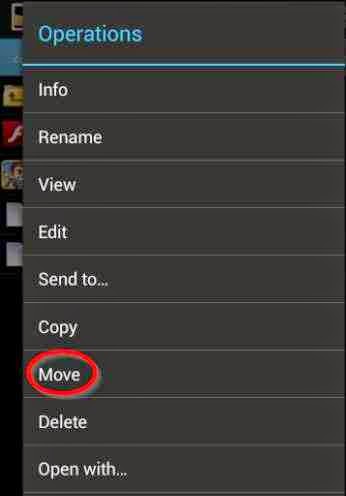
- A space is provided to specify the location where youll like to move the file to.
- Type in /mnt/sdcard/folder
- Then click on OK.
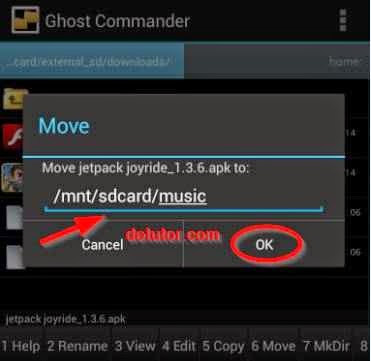
For example, i have a folder in file manager called music, ill type /mnt/sdcard/music. After moving the file to the file manager, you can now share/send it.
Go to link download
Friday, September 23, 2016
The Sun And It s Introduction Find The Best Online Information
The Sun And It s Introduction Find The Best Online Information
Sun,
.jpg)
closest star to Earth. The Sun is a huge mass of hot, glowing gas. The strong gravitational pull of the Sun holds Earth and the other planets in the solar system in orbit. The Sun’s light and heat influence all of the objects in the solar system and allow life to exist on Earth.
The Sun is an average star—its size, age, and temperature fall in about the middle of the ranges of these properties for all stars. Astronomers believe that the Sun is about 4.6 billion years old and will keep shining for about another 7 billion years.
For humans, the Sun is beautiful and useful, but also powerful and dangerous. As Earth turns, the Sun rises over the eastern horizon in the morning, passes across the sky during the day, and sets in the west in the evening. This movement of the Sun across the sky marks the passage of time during the day (see Sundial). The Sun’s movement can produce spectacular sunrises and sunsets under the right atmospheric conditions. At night, reflected sunlight makes the Moon and planets bright in the night sky.
The Sun provides Earth with vast amounts of energy every day. The oceans and seas store this energy and help keep the temperature of Earth at a level that allows a wide variety of life to exist. Plants use the Sun’s energy to make food, and plants provide food for other organisms. The Sun’s energy also creates wind in Earth’s atmosphere. This wind can be harnessed and used to produce power.While it lights our day and provides energy for life, sunlight can also be harmful to people. Human skin is sensitive to ultraviolet light emitted from the Sun. Earth’s atmosphere blocks much of the harmful light, but sunlight is still strong enough to burn skin under some conditions (see Burn). Sunburn is one of the most important risk factors in the development of skin cancers, which can be fatal. Sunlight is also very harmful to human eyes. A person should never look directly at the Sun, even with sunglasses or during an eclipse. The Sun influences Earth with more than just light. Particles flowing from the Sun can disrupt Earth’s magnetic field, and these disruptions can interfere with electronic communications.
Characteristics of the Sun, The distance between the sun and the earth varies because the earth travels in an elliptical rather than circular orbit. The distance is roughly 100 times the sun’s diameter. Turbulence in the photosphere forms granules of various sizes and sunspots. Temperature is a measure of kinetic energy. The dense plasma in the center of the sun is roughly 2500 times hotter than the surface. Gases in the corona have escaped from the sun’s surface and have a very high velocity. The sun’s spectral type, G2, indicates that it is composed of hydrogen, helium, calcium,iron and other metals.
II PHYSICAL CHARACTERISTICS
The Sun is large and massive compared to the other objects in the solar system. The Sun’s radius (the distance from its center to its surface) is 695,508 km (432,169 mi), 109 times as large as Earth’s radius. If the Sun were hollow, a million Earths could fit inside it. The Sun has a mass of 1.989 × 1027 metric tons. This number is very large. Written out, it would be the digits 1989 followed by 24 zeroes. The Sun is 333,000 times as massive as Earth is. Despite its large mass, the Sun has a lower density, or mass per unit volume, than Earth. The Sun’s average density is only 1.409 g/cu cm (1.188 oz/cu in), which is a quarter of the average density of Earth.
The Sun produces an enormous amount of light. It generates 3.83 × 1026 watts of power in the form of light. In comparison, an incandescent lamp emits 60 to 100 watts of power. The temperature of the outer, visible part of the Sun is 5500°C (9900°F).
From Earth the Sun looks small, because it is far away. Its average distance from Earth is 150 million km (93 million mi). Light from the Sun takes about eight minutes to reach Earth. This light is still strong enough when it reaches Earth, however, to damage human eyes when viewed directly. The Sun is much closer to Earth than any other star is. The Sun’s nearest stellar neighbor, Proxima Centauri (part of the triple star Alpha Centauri), is 4.3 light-years from our solar system, meaning light from Proxima Centauri takes 4.3 years to reach the Sun. The Sun is so much closer to Earth than all other stars are that the intense light of the Sun keeps us from seeing any other stars during the day.
A Importance to Earth
Earth would not have any life on it without the Sun’s energy, which reaches Earth in the form of heat and light. This energy warms our days and illuminates our world. Green plants absorb sunlight and convert it to food, which these plants then use to live and grow. In this process, the plants give off the oxygen that animals breathe. Animals eat these plants for nourishment. All plant and animal life relies on the Sun’s presence
The Sun also provides—directly or indirectly—much of the energy on Earth that people use for fuel (see Solar Energy). Devices called solar cells turn sunlight into electricity. Sunlight can heat a gas or liquid, which can then be circulated through a building to heat the building. The energy stored in fossil fuels originally came from the Sun. Ancient plants used sunlight as fuel to grow. Animals consumed these plants. The plants and animals stored the energy of sunlight in the organic material that composed them. When the ancient plants and animals died and decayed, this organic material was buried and gradually turned into the petroleum, coal, and natural gas people use today. The Sun’s energy produces the winds and the movements of water that people harness to produce electricity (see Wind Energy; Water Power). The Sun heats Earth’s oceans and land, which in turn heat the air and make it circulate in the atmosphere as wind. The Sun fuels Earth’s water cycle, evaporating water from the oceans, seas, and lakes. This water returns to the ground in the form of precipitation, flowing back to the oceans through the ground and in rivers. The energy of water’s motion in rivers can be harnessed with dams.
B Role in the Solar System
The Sun’s gravitational pull holds the solar system together. The planets, asteroids, comets, and dust that make up our solar system are strongly attracted to the Sun’s huge mass. This gravitational attraction keeps these bodies in orbit around the Sun. The Sun also influences the solar system with its diffuse outer atmosphere, which expands outward in all directions. This expanding atmosphere fills the solar system with a constant flow of tiny, fast, electrically charged particles. This flow is called the solar wind. The region through which the solar wind blows is called the heliosphere. Estimates vary about the extent of the heliosphere, ranging from about 86 to about 100 times the distance between Earth and the Sun. Interstellar winds may give the heliosphere an egg shape. The solar wind spreads out as it leaves the Sun. The point at which the solar wind is so diffuse that it stops having an effect on its surroundings is called the heliopause. The heliopause marks the outer edge of the solar system. Within the heliosphere, the Sun provides most of the heat and light that are present, and the particles in the solar wind interact with the planets and satellites in the solar system. The solar wind causes auroras—displays of colored light—in the atmosphere of Earth’s polar regions. The solar wind also carries remnants of the Sun’s magnetic field, which affect the magnetic fields of the planets and larger satellites. The solar wind pushes the planets’ magnetic fields away from the Sun, turning them into elongated, windsock shapes. For more information, see the Solar Wind section of this article.
III THE SUN AS A STAR
The Sun is extremely important to Earth and to our solar system, but on the scale of the galaxy and the universe, the Sun is just an average star. It is one of hundreds of billions of stars in our galaxy, the Milky Way, which is just one of more than 100 billion galaxies in the observable universe
The Sun’s Place in the Milky Way
The Milky Way Galaxy contains about 400 billion stars. All of these stars, and the gas and dust between them, are rotating about a galactic center. Stars that are farther away from the center move at slower speeds and take longer to go around it.
The Sun is located in the outer part of the galaxy, at a distance of 2.6 × 10¹⁷ km (1.6 × 10¹⁷ mi) from the center. The Sun, which is moving around the center at a velocity of 220 km/s (140 mi/s), takes 250 million years to complete one trip around the center of the galaxy. The Sun has circled the galaxy more than 18 times during its 4.6-billion-year lifetime.
B Comparisons with Other Stars
A star is a ball of hot, glowing gas that is hot enough and dense enough to trigger nuclear reactions, which fuel the star. In comparing the mass, light production, and size of the Sun to other stars, astronomers find that the Sun is a perfectly ordinary star. It behaves exactly the way they would expect a star of its size to behave. The main difference between the Sun and other stars is that the Sun is much closer to Earth.Most stars have masses similar to that of the Sun. The majority of stars’ masses are between 0.3 to 3.0 times the mass of the Sun. Theoretical calculations indicate that in order to trigger nuclear reactions and to create its own energy—that is, to become a star—a body must have a mass greater than 7 percent of the mass of the Sun. Astronomical bodies that are less massive than this become planets or objects called brown dwarfs. The largest accurately determined stellar mass is of a star called V382 Cygni and is 27 times that of the Sun.The range of brightness among stars is much larger than the range of mass. Astronomers measure the brightness of a star by measuring its magnitude and luminosity. Magnitude allows astronomers to rank how bright, comparatively, different stars appear to humans. Because of the way our eyes detect light, a lamp ten times more luminous than a second lamp will appear less than ten times brighter to human eyes. This discrepancy affects the magnitude scale, as does the tradition of giving brighter stars lower magnitudes. The lower a star’s magnitude, the brighter it is. Stars with negative magnitudes are the brightest of all. Magnitude is given in terms of absolute and apparent values. Absolute magnitude is a measurement of how bright a star would appear if viewed from a set distance away. By convention, this distance is 10 parsecs, or 32.6 light-years. Apparent magnitude measures how bright a star appears from Earth. The Sun’s absolute magnitude is 4.8. The brightest known stars have absolute magnitudes of about -9 (lower magnitudes mean brighter stars), and the dimmest known stars have absolute magnitudes of about 20. The apparent magnitude of the Sun is -26.72. The apparent magnitude of the brightest star in Earth’s night sky, Sirius, is -1.46. The dimmest stars that can be seen from Earth with unaided eyes have apparent magnitudes of about 6.
Astronomers also measure a star’s brightness in terms of its luminosity. A star’s absolute luminosity or intrinsic brightness is the total amount of energy radiated by the star per second. Luminosity is often expressed in units of watts. The Sun’s absolute luminosity is 3.86 × 1026 watts. The absolute luminosity of stars ranges from one thousandth of the luminosity of the Sun to 10 million times that of the Sun.Another way of measuring brightness is to measure the amount of light that reaches an observer. This measurement is called apparent brightness or apparent luminosity. Apparent luminosity depends on the absolute luminosity of a star and the distance from the star to the observer. Apparent luminosity becomes smaller as distance from the star to the observer becomes larger. From Earth, the apparent luminosity of the Sun is 10 billion times greater than the apparent luminosity of the next brightest star, Sirius, because the Sun is so much closer to Earth. The radius of the Sun is about average among stars. The radii of most stars fall between 0.2 and 15 times the Sun’s radius, although some giant stars are hundreds of times larger than the Sun. Larger stars usually have larger absolute luminosities.We receive much more energy from the Sun than from other stars, because the Sun is so nearby. The Sun’s proximity also allows scientists to study its face in detail. A modest telescope can resolve solar structures that are 700 km (400 mi) across—about the distance from Boston, Massachusetts, to Washington, D.C. That level of detail is comparable to seeing the features on a coin from 1 km (0.6 mi) away. Other stars are so distant that the details on their surfaces remain unresolved with even the largest telescopes.
C Composition of the Sun
The Sun is a second-generation star, meaning that some of its material came from former stars. Some stars in our galaxy are nearly as old as the expanding universe, which scientists believe originated in the big bang explosion about 14 billion years ago (see Big Bang Theory). In contrast, the Sun is only 4.6 billion years old.The first stars were composed only of the hydrogen and helium produced in the early universe. These stars are called first-generation stars. Although hydrogen is also the main ingredient of the Sun, it contains heavier elements, such as carbon, nitrogen, and oxygen, as well. These elements formed inside first-generation stars that lived and died before the Sun was born. When these massive, short-lived stars used up their internal fuel, they exploded and ejected the heavier elements into interstellar space. The Sun formed from this material, making it a second-generation star.
D The Sun’s Remote Past and Distant Future
The Sun and planets in our solar system formed when a rotating cloud of dust and gas in space collapsed, or condensed, due to the gravitational attraction between the particles in the cloud. A nearby supernova explosion may have triggered the collapse, or a random fluctuation in the density of the cloud may have started the process. The Sun formed at the center of the spinning cloud, while the debris that condensed into planets formed a flattened disk revolving around the Sun. When the Sun reached its present size about 4.6 billion years ago, it was hot enough inside to ignite the nuclear reactions that make it glow.
The Sun cannot shine forever, because it will eventually use up its present fuel. The nuclear fusion reactions that make the Sun glow (for more information, see the section entitled The Sun’s Energy in this article) depend on the element hydrogen, but the hydrogen in the Sun’s core will eventually run out. Nuclear reactions have converted about 37 percent of the hydrogen originally in the Sun’s core into helium. Astronomers estimate that the Sun’s core will run out of hydrogen in about 7 billion years.
The Sun will grow steadily brighter as time goes on and more helium accumulates in its core. Even as the supply of hydrogen dwindles, the Sun’s core must keep producing enough pressure to keep the Sun from collapsing in on itself. The only way it can do this is to increase its temperature. The increase in temperature raises the rate at which nuclear reactions occur and makes the Sun brighter. In 3 billion years, the Sun will be hot enough to boil Earth’s oceans away. Four billion years thereafter, the Sun will have used up all its hydrogen and will balloon into a giant star that engulfs the planet Mercury. At this point in its life, the Sun will be a red giant star. The Sun will then be 2,000 times brighter than it is now, and hot enough to melt Earth’s rocks. At this time the outer solar system will get warmer and more habitable. The icy moons of the giant planets may warm enough to be covered by water instead of ice.
When the giant Sun uses up its fuel, it will no longer be able to support the weight of its inner layers, and they will begin to collapse toward the core, eventually producing a small, dense, cool star called a white dwarf. The Sun will then have about the same radius as Earth has, but it will be much denser and more massive than Earth. The Sun will become a white dwarf star about 8 billion years from now. After it becomes a white dwarf, it will cool slowly for billions of years, eventually becoming so cool that it will no longer emit light.
IV THE SUN’S ENERGY
The Sun produces an amazing amount of light and heat through nuclear reactions (Nuclear Energy). The process that produces the Sun’s energy is called nuclear fusion. In nuclear fusion, two atoms come together to produce a heavier atom. Fusion reactions release energy and tiny elementary particles.
A Scale of the Sun’s Energy
In just one second the Sun emits more energy than humans have used in the last 10,000 years. The Sun has been shining relatively steadily for 4.6 billion years. Until the early 20th century, humans did not know of any process that could explain the energy production of the Sun. Even if a fire, such as those that occur on Earth, were as large as the Sun, the fire would consume the mass of the Sun in a few thousand years.
Scientists now know that the Sun is mainly composed of hydrogen, the lightest and most abundant element in the universe. The Sun contains an enormous amount of hydrogen, however, which makes the Sun very massive. All matter inside the Sun is gravitationally attracted to all the other matter in the Sun, and this attraction tends to pull the Sun’s mass together. This inward pull creates high pressures and temperatures inside the Sun.
The center is so violent and hot that collisions between atoms break the hydrogen atoms apart into their subatomic ingredients. A hydrogen atom is made up of a nucleus that contains a positively charged proton, and a negatively charged electron that orbits the nucleus. In the Sun, collisions separate the electron from the nucleus, freeing each to move about the solar interior. The positively charged nuclei, or protons, are called ions. A gas in which particles are ionized, or have electric charges, is called plasma. Scientists often consider plasma, such as the material inside the Sun, to be a fourth state of matter—the three more familiar states of matter are gas, liquid, and solid. See also Atom.
Go to link download
Monday, August 29, 2016
Where to Find Free Images Online For Blog
Where to Find Free Images Online For Blog
Where to Find Free Images for Website
A list of several places to find free images for your blog/website is given in this post. Images in a blog post makes it look attractive and gives the readers a better and faster understanding of what the post entails. With pictorial representation of the major steps in a process, it takes a little amount of time and effort to assimilate and go through the steps. Although images depending on their size and quality can increase the page load time of a blog/site, when edited, resized and compressed appropriately, they make your blog post complete. Also, images with alt tags in a post can increase the sites traffic since they are crawlable by search engines like Google. As we all know, Google displays search results with related images which are linked to the sites they were retrieved from. By including images in your blog posts, youre improving your sites on page SEO in order to increase traffic to it.Also Read: Free Blog Backgrounds
Mouse Cursors For Tumblr
Random 468x60 Banner Ad For Blogger
There are several places where you can find free images for your blog, and the most popular is Google. On carrying out a search on Google and clicking on the images tab, youll get lots of images corresponding to that search string. Some of these images are copyrighted images which should not be used by the general public.By using the advanced feature of Google image search, options to filter the search is also included, which means some useful images you might need will not be included in the result. To avoid using images that break copy right laws on your blog and not just limit the places you can find images to Google, here is a list of places where you can easily download free and premium royalty free stock photography and Illustrations.
1. Flicker creative common
One of the places where you can find good quality images for your website is on flickr.
2. Dreamstime
Dreamstime offers a free section that’s searchable and frequently updated. It requires registration.3. Stock Photos
Stock photos for free provides free images. Registration is required before gaining access to the images.4. Photopin
On Photo Pin, several images can be found.
5. Free Digital Photos
Free Digital Photos has a great collection of free images which are categorized and searchable for business, personal or educational use. Using the free images often requires a credit to the photographer and the site6. Free Images
Free Images offers a good number of free images for commercial use7. Pixabay
Pixabay allows blogger to make use of a growing directory of images. These images can be included in your blog without attribution to the source.
Also Read: Add Different Background Image In Specific Blogger Page
Best Mouse Cursor Schemes For Windows 7, 8 and 8.1
8. MorgueFile
9. Free Photos Bank
Free Photos Bank has a nice collection of free photos available for download which require no registration.10. Freedigitalphotos
On Freedigitalphotos you can get free blog stock photos and illustrations.
11. Free Range Stock
Free Range Stock offers access to free high-quality, high-resolution stock photos. Registration is required.
12. Pickupimage
Pickupimage is a large collection of free stock images for commercial purposes mostly on nature and outdoor related scenes . No registrationis required.Go to link download
Subscribe to:
Posts (Atom)